
Pregnancy Against Imprisonment
If Beale Street Could TalkThis central thread follows Tish’s pregnancy as it grows alongside Fonny’s unjust confinement, turning a private revelation into a shared struggle to keep both father and child alive and connected.
increasing Bearing strength in each event
 decreasing
Bearing strength in each eventdecreasingThe Glass-Side Revelation

A Future Announced Through Glass
The news
Tish visits Fonny in jail and tells him she is pregnant. She tries to sound reassuring, knowing that his pride and fear may make the news feel like another burden. His first astonishment gives way to laughter when they imagine raising the child together.
A promise under pressure
The glass between them makes celebration painful: they cannot touch, and Fonny must return to his cell while Tish carries their news into the city. Their practical plans depend on his release, yet she insists that they will have him out before the birth. The promise is both reassurance and a way to resist imagining the worst.
The pregnancy immediately gives the prosecution’s long delay a human measure. Each passing day affects not only a man awaiting trial but a child who will soon need a father outside prison walls.
The Family Announcement
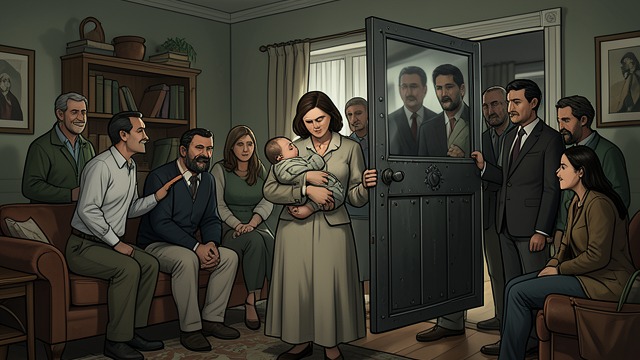
A Child Claimed by Two Families
A household makes room
Tish tells Sharon first, then joins Sharon, Joseph, and Ernestine for the family announcement. Joseph struggles to speak at first, but his fear gives way to tenderness; he asks to be the one to tell Frank. The Rivers family treats the coming child as welcome, not as a reason to shame Tish.
A rupture with the Hunts
When the Hunts arrive, Frank is glad, but Alice condemns the pregnancy and questions who will take responsibility. Tish answers that the child’s parents will. Sharon and Ernestine defend her, and the encounter ends with the Rivers women making clear that the Hunts have rejected their own kin.
The scene turns pregnancy into a test of belonging. With Fonny imprisoned and his mother and sisters hostile, the Rivers family becomes the support system on which Tish and the unborn child will depend.
A Child’s First Movement
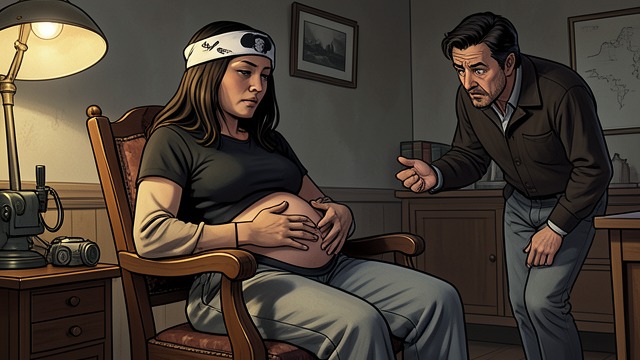
The Pregnancy Enters the Struggle
A plan for the witness
Tish and Ernestine discuss the state’s missing witness, Victoria Rogers, and the possibility of sending Sharon to Puerto Rico. Tish initially worries over whether Victoria was truly raped, but Ernestine insists that the family must focus on disproving the prosecution’s case rather than expecting a traumatized witness to change her account.
A claim on the future
As they talk, the baby moves for the first time. The sensation changes Tish’s understanding of responsibility: the child depends on her not merely as a thought or a hope, but as a living person preparing for birth. Tish recognizes that the situation may worsen, but worsening does not rule out improvement.
The movement makes the pregnancy an active force in the story. It demands that Tish transform fear into endurance while the adults around her pursue a legal path that remains uncertain.
Daily Visits and Rest
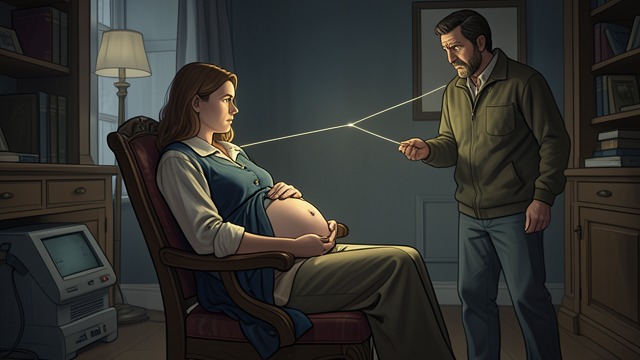
Presence as Practical Care
A necessary change
As her pregnancy becomes physically demanding, Tish struggles to keep working and to make the six o’clock visit. Joseph tells her plainly that she must quit: the family will find another way to manage money, but she must protect herself and the baby. She agrees, even though leaving work also means giving up one of her ordinary routines.
A sustaining presence
Tish begins seeing Fonny every day, sometimes twice. Her visits cannot alter his legal position directly, but he knows that someone outside still cares for him. Their conversations and laughter give him a connection to the life that prison is trying to erase; the baby’s growth becomes, for both of them, a reason to keep imagining freedom.
The thread shifts from financial contribution to emotional presence. Tish’s daily attendance is not a substitute for the legal campaign, but it keeps Fonny from being isolated completely and helps sustain their shared expectation of a future.
Labor and Arrival
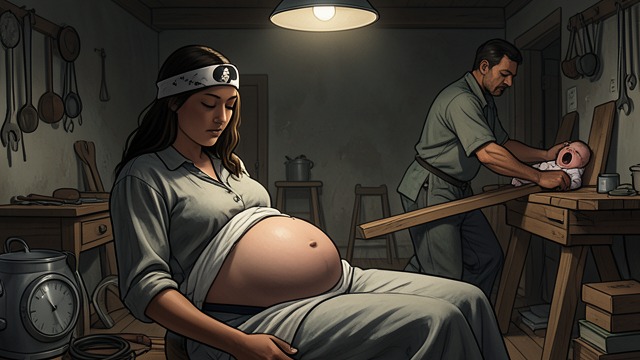
The Child Arrives Amid Loss
The body reaches its limit
Tish is heavily pregnant and exhausted when she learns that Frank has disappeared after losing his job. Joseph eventually returns with the news that Frank has been found in his car, dead in the woods. Tish tries to take in the loss, but the shock overwhelms her and labor begins.
Birth without release
As Tish gives birth, the narration returns to Fonny working on wood and stone, then hears the baby crying from far away. The child arrives, but the story does not confirm that Fonny has been freed or reunited with Tish. Birth therefore offers a beginning without resolving the family’s central danger.
The ending keeps hope and grief together. The baby makes the future tangible, while Fonny’s imprisonment and Frank’s death show how much has been taken from the people trying to protect that future.
Early in the story, during a visit at The Tombs
That Saturday evening, about three months into the pregnancy
Several months later, during a conversation between Tish and Ernestine
After Joseph urges Tish to leave work, during the later months of pregnancy
Near the ending, after Frank is found in the woods
